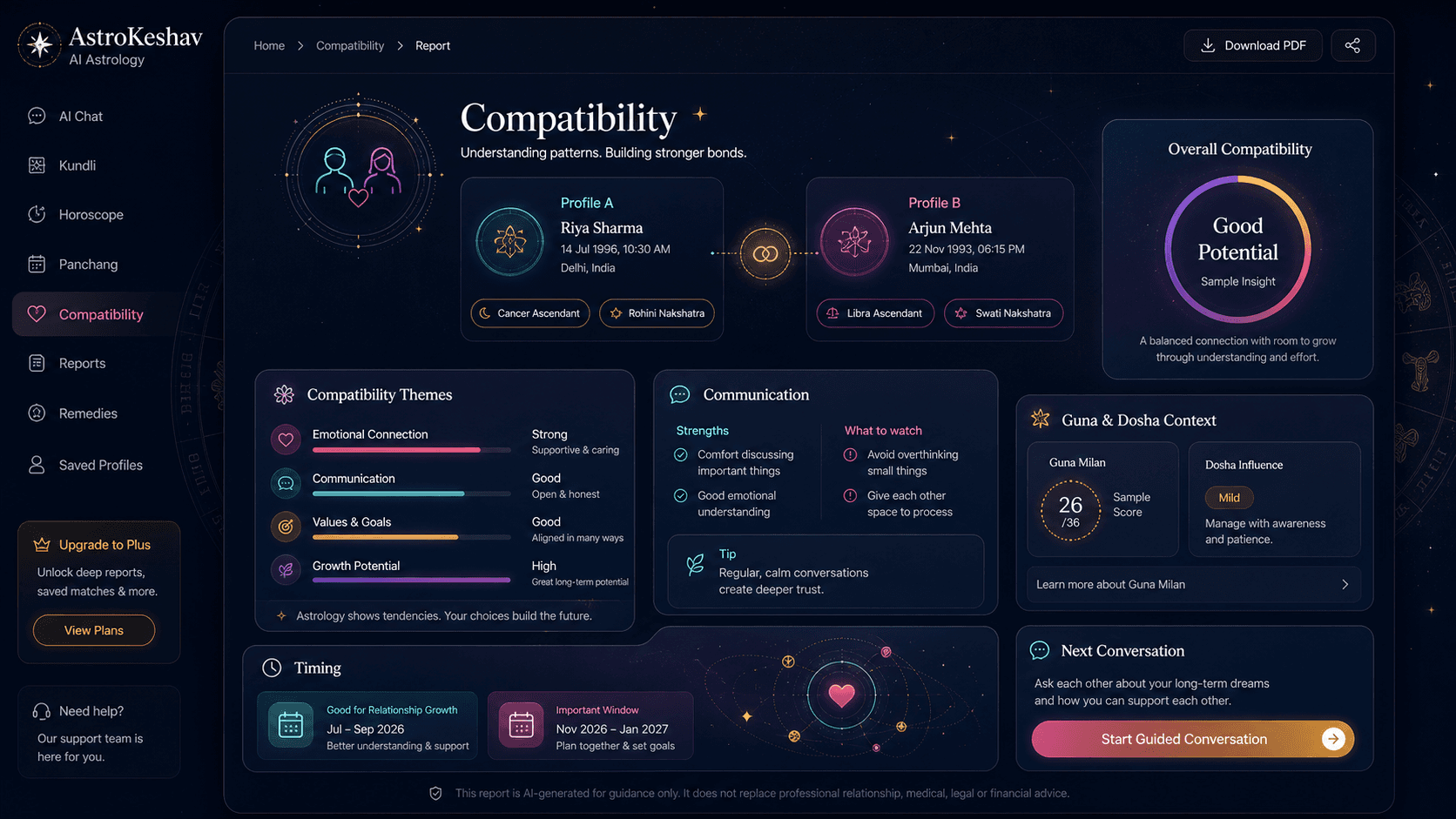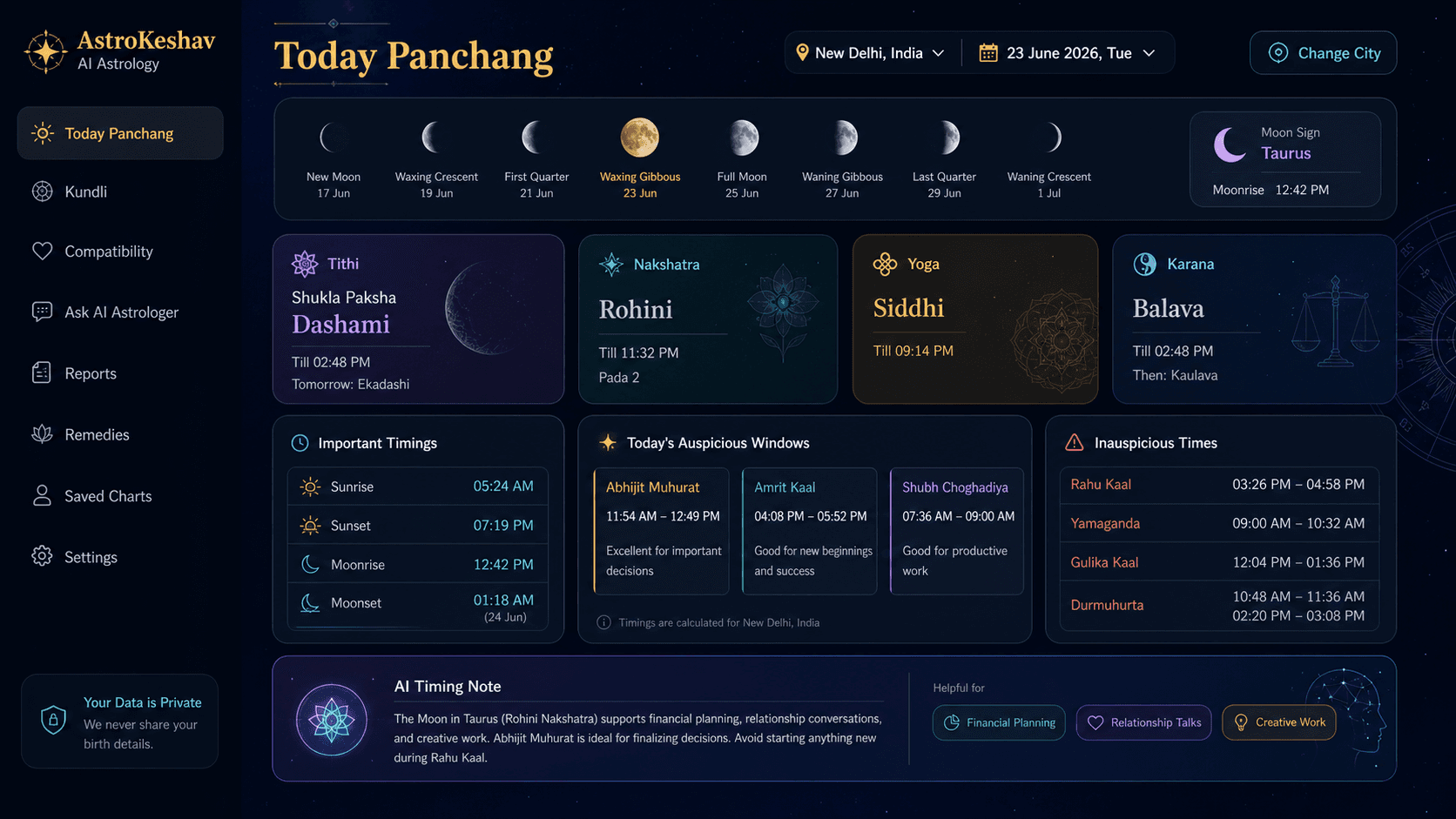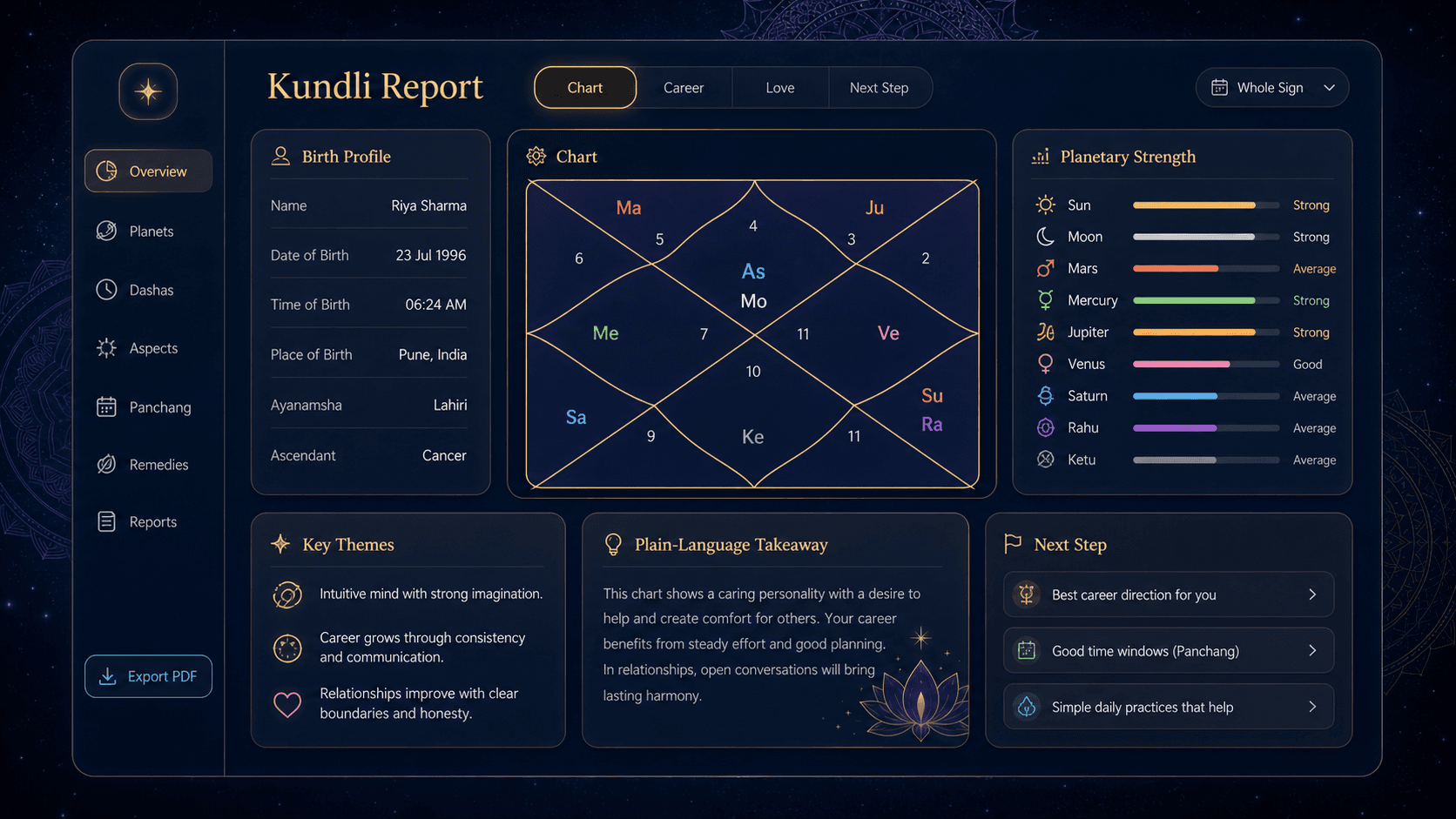
Your first kundli reading should help you understand the structure of your chart before jumping into remedies or predictions.
A kundli is not a verdict. It is a map of tendencies, timing, strengths, friction points, and the choices that can mature them.
The First Layer Is Orientation
A first kundli reading should orient you. It should show your ascendant, moon sign, major houses, planetary placements, and the broad life areas that repeat as themes. This is the foundation before detailed prediction.
When the basics are clear, every later question becomes sharper. Career, relationship, finance, family, and timing readings all improve when the chart structure is understood.
Do Not Begin With Fear
Many users first hear about astrology through alarming words: dosha, delay, obstacle, weak planet, bad period. These terms require context. A single placement does not define a life.
A responsible reading explains the meaning, the strength, the counterbalances, and the practical behavior that supports better outcomes.
Ask Better Questions After The Chart Opens
Once the chart is visible, move from vague questions to precise ones. Instead of asking whether life will be successful, ask what kind of work rhythm suits the chart. Instead of asking whether marriage will be good, ask which communication patterns need care.
- What strengths should I build around in the next year?
- Which habits create avoidable friction in relationships?
- What does my chart suggest about career visibility and discipline?
- Which timing windows are better for review, preparation, or launch?
Use AI For Translation, Not Blind Certainty
AI can make a kundli easier to understand by translating technical factors into simple language. The value is not in pretending to be all-knowing. The value is in organizing complex chart logic so a person can reflect without confusion.
AstroKeshav pairs chart-aware interpretation with plain language, so the reading stays usable rather than theatrical.
AstroKeshav Note
Astrology guidance is advisory and reflective. Use it for self-awareness and planning, not as a substitute for qualified medical, legal, financial, mental health, or emergency support.