Panchang can support modern life when it is translated into clear timing notes instead of overwhelming tables.
Good timing is not about controlling every minute. It is about choosing a better rhythm for actions that already matter.
Panchang Is A Daily Rhythm Tool
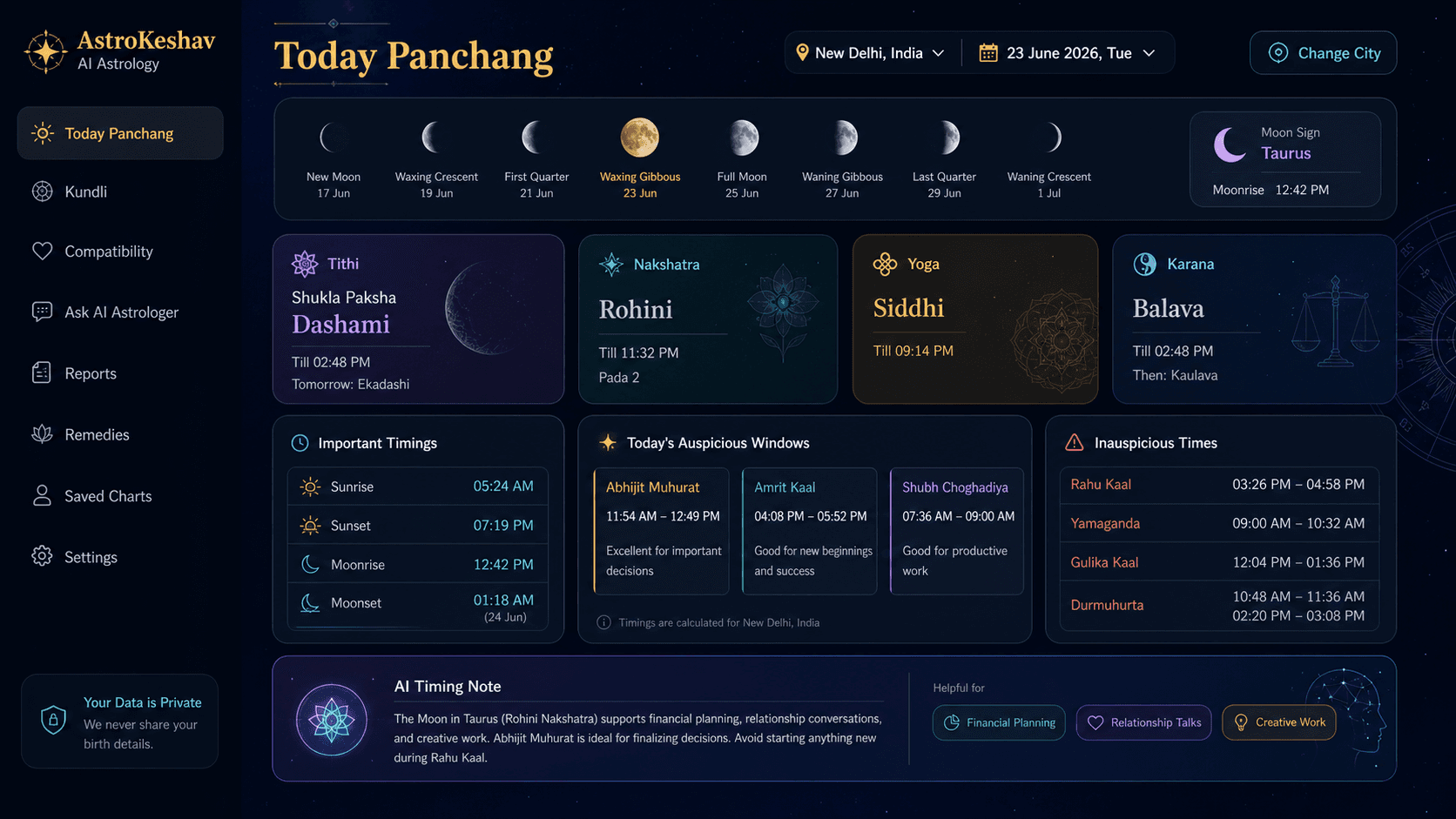
Panchang describes the quality of a day through traditional time factors. For modern users, the challenge is translation. People need to know whether the day favors starting, reviewing, repairing, resting, negotiating, or preparing.
That is why a clear panchang summary can be more useful than a long table with no interpretation.
Match The Window To The Action
Not every task needs a muhurat. But important actions benefit from attention. A launch, agreement, first meeting, spiritual practice, or family conversation may feel different when it is placed in a supportive window.
- Use stronger windows for starts, announcements, and commitments.
- Use quieter windows for review, repair, planning, and reflection.
- Avoid turning ordinary daily tasks into a source of anxiety.
Keep It City-Aware
Panchang depends on local timing. Sunrise, sunset, and certain daily periods change by location, so city-aware guidance matters. The same calendar date can have different practical windows depending on where you are.
A Modern Practice
Use panchang lightly but consistently. Read the day note in the morning, choose one meaningful adjustment, and continue with responsibility. This keeps the wisdom alive without making ordinary life rigid.
AstroKeshav Note
Astrology guidance is advisory and reflective. Use it for self-awareness and planning, not as a substitute for qualified medical, legal, financial, mental health, or emergency support.